
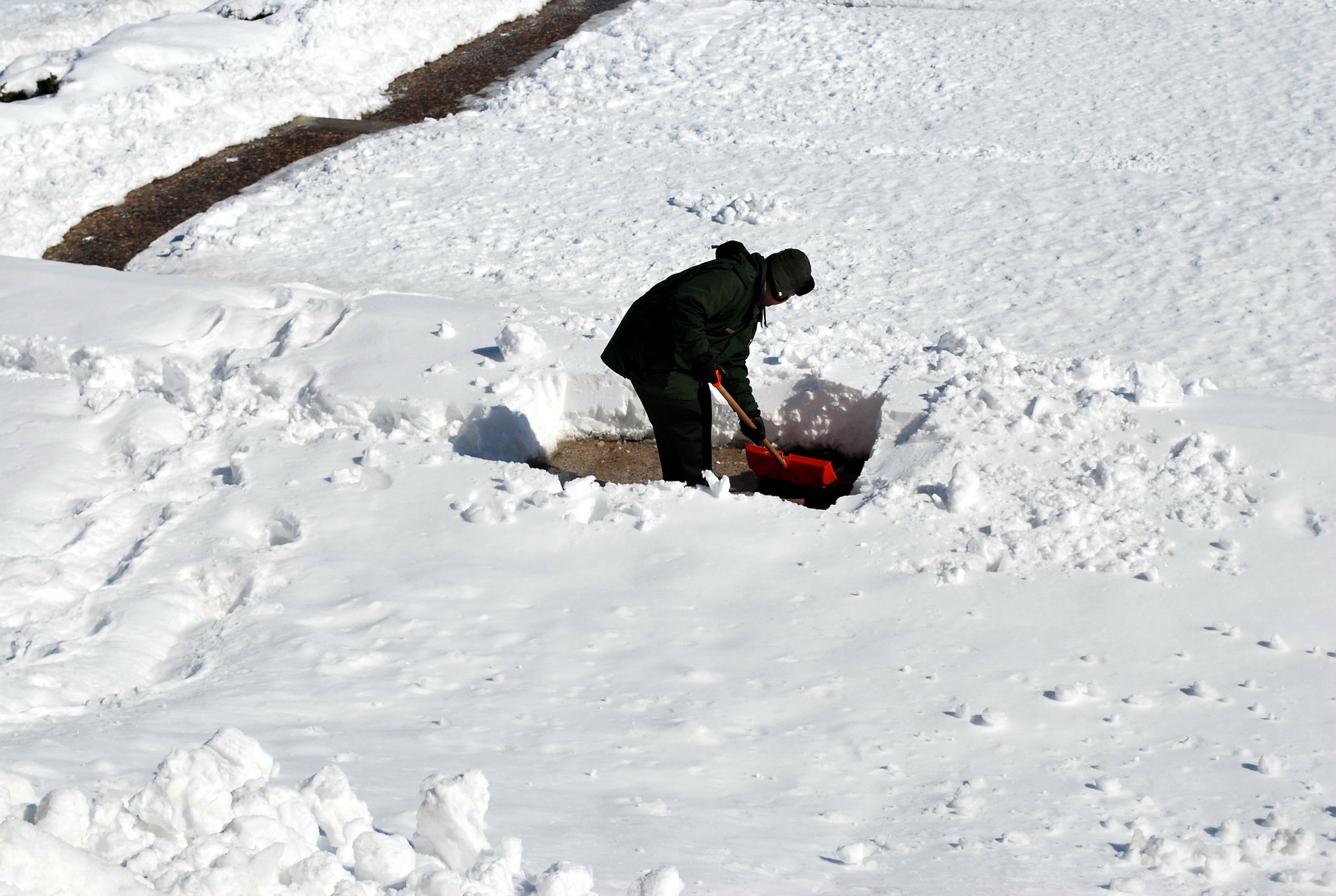
Snowy Sidewalk Slip and Fall on Long Island. Am I Liable?

The snow season is about to begin, and with it, so will the rise of slip and fall accidents.  Some winters can be relentless. For some reason, 20 inches of snow in March just does not drum up those same feelings as a “White Christmas.” Shoveling the sidewalk in front of your home can feel like a cruel joke after spending hours digging your car out of the driveway in order to get to work.  The nagging question that typically results in the homeowner shoveling the sidewalk is: “What happens if someone slips and falls on my sidewalk that has not been shoveled?” --and for good reason.  Slip and fall accidents involving snow and ice are very dangerous and often result in serious injuries. But are you legally obligated to shovel the sidewalk in front of your home? 

Most towns, villages, and cities have specific ordinances that require property owners to clear the sidewalk in front of their property. However, such ordinances do not necessarily create a legal duty owed to a pedestrian walking on the sidewalk in front of your home. 

Indeed, a homeowner’s failure to clear the sidewalk in front of his/her home in the Town of Hempstead does not automatically create liability for the homeowner for a slip and fall on snow or ice. The Town of Hempstead is actually responsible. However, the Town must have received prior written notice of the dangerous sidewalk conditions (which is often difficult in the case of weather-related conditions like snow and ice) in order to impose liability on the Town. The Village of Garden City has a comparable ordinance. Similarly, the Town of North Hempstead Code does not contain language imposing tort liability on abutting landowners for the breach of a duty to maintain sidewalks in a reasonably safe condition.  See Code of the Town of North Hempstead §§ 48-1 to 48-15.

However, many other municipalities on Long Island, including the Village of Mineola, Village of Hempstead, and the Town of Oyster Bay, have ordinances that specifically create a legal duty for abutting property owners for injuries caused by unsafe conditions (such as snow and ice) on sidewalks.  

The Code for the Village of Mineola reads as follows:

In the event that the owner and/or occupant of any premises abutting a sidewalk, path and/or public thoroughfare shall fail to [remove snow and ice], and personal injury . . . shall result from such failure, the owner and/or occupant of the premises shall be liable to all persons who are injured . . . as a result of such noncompliance.

The Code for the Village of Hempstead specifically requires that “[t]he owner [or] occupant of any real property shall, within 12 hours after the snow ceases to fall, remove the snow from the paved public walkway adjacent to such real property and keep the same free from snow and ice . . . In the event that personal injury or property damage shall result from the failure of any owner or occupant to comply with [the requirement to remove snow,] the owner and the occupant shall be liable to all persons injured or whose property is damaged directly or indirectly thereby and shall be liable to the Village of Hempstead . . .”

The Town of Oyster Bay's Code specifically provides that:

Each owner and occupant of any house or other building . . . in the Town shall keep the sidewalk in front of the lot or house or building free from obstruction by snow or ice and icy conditions . . . Snow and ice shall be removed within six hours after snow has ceased to fall . . . Such owner or occupant . . . shall be liable for any injury or damage by reason of omission, failure or negligence to make, maintain or repair such sidewalk or for a violation or nonobservance of the ordinances relating to making, maintaining and repairing sidewalks . . .

Accordingly, if you live in a town or village with ordinances that specifically impose liability, you have a duty to keep the sidewalk abutting your property in reasonably safe condition. This means not only clearing the sidewalk of snow and ice, but also applying salt or sand.

If you do not live in a town or village with such ordinances, you might not be found liable for a slip and fall, but it does not mean a plaintiff’s attorney will not try to blame you for the incident.  In any event, you will likely still shovel your sidewalk in an effort to be a good neighbor. Who likes that one neighbor on the block who doesn’t shovel anyway?

You should thoroughly read your local village or town code (most are available online) for more answers.    

For Those Who Face Foreclosure: Fear Not. Here are Five Fast Alternatives.

Nationally, foreclosures have dropped significantly over the last few years. However, the lingering effects of the housing-market collapse, which started almost a decade ago, will continue in 2017 and beyond. In fact, approximately one third of all civil cases in New York State courts are foreclosure actions. In 2015, more than 40,000 new foreclosure actions were filed throughout the state (which is only a few thousand fewer cases than were filed at the height of the housing collapse in 2009). Notably, 60 percent of New York State’s foreclosure actions were commenced in four counties in the metropolitan area, including Brooklyn and Queens. 

The thought of losing a home can be daunting. However, foreclosure actions have wide-ranging resolutions that do not always result in the loss of the home. Here is a list of potentially viable alternatives to succumbing to foreclosure: 

1.      LOAN MODIFICATION

You may be able to conduct negotiations with your lender to complete a loan modification to modify the terms of your agreement with your lender—such as the payment amount, interest rate, length of the loan, etc.

2.      FORECLOSURE DEFENSE LITIGATION STRATEGY

You can take an aggressive foreclosure defense approach against the allegations of the lender – challenging the validity of the foreclosure proceedings and the lender’s compliance with regulations in initiating the foreclosure proceeding. This includes, among other things, questioning whether the lender violated any of your rights (predatory lending practices) or whether there are procedural violations with the foreclosure.    

3.      CHAPTER 13 BANKRUPTCY

Filing for Chapter 13 bankruptcy will place an automatic stay on foreclosure proceedings. This option can provide you with time to figure out a resolution and may allow you to keep your home. If you stay current on your loan payments and make up the arrears through your Chapter 13 bankruptcy plan, the lender cannot foreclose.  

4.      SHORT SALE

A short sale may enable you to sell your home for less than the balance of your loan. However, the short sale must be negotiated and approved with your lender in advance to ensure you are not held accountable for the difference between the sale and your loan balance.

5.      DEED IN LIEU OF FORECLOSURE/CASH FOR KEYS

Deed in Lieu of Foreclosure and Cash for Keys are options wherein a homeowner agrees to give back the property. With a Deed in Lieu of Foreclosure, the homeowner agrees to give back the home without requiring the bank to complete a formal foreclosure proceeding. Cash for Keys is a similar option, except, in this case, the lender offers a cash incentive for the homeowner to give back the home and leave it in good condition without waiting for the entire foreclosure process to conclude. These options can be advantageous to a defaulting homeowner, as they allow for forgiveness of the remaining debt, avoid the publicity of a foreclosure, and have less of an impact on his or her credit. Lenders typically prefer these options, as they reduce the time and expense of litigating a foreclosure proceeding to conclusion in New York.

Out-of-Possession Landlord Prevails in Personal Injury Lawsuit

Little League Image.png

In Burgess v City of Glen Falls, a child injured himself after falling from the upper tier of a set of bleachers as a result of a missing foot plank at the East Field Little League Complex in the City of Glen Falls. The City of Glen Falls (hereinafter the “City”) owns the property where the baseball field and bleachers are located leases it Glens Falls Little League, Inc. (hereinafter “GFLL”) under the terms of a 30-year lease, running from January 1, 1992 to December 31, 2021

Under the terms of the lease between GFLL and the City, GFLL had “exclusive use of the Property” to conduct its baseball program. GFLL also agreed that it would construct baseball fields on the site at its expense. The lease further provided that “GFLL shall be responsible for all maintenance and repairs to the Property.” 

The City moved for summary judgment to dismiss the action upon the ground that the City was an out-of-possession landlord who had relinquished control of the premises to GFLL.

In opposition, the Plaintiff argued that the City is not an out-of-possession landlord, as the lease allowed for the City to conduct certain scheduled events on the Property when not in use by GFLL. Pursuant to the lease provision, the City is responsible for any maintenance or repairs required as a result of the events it conducts. The Plaintiff further noted that the City had exercised this right ten months prior to the incident, when the City held an “Annual Summer Jam” at the Property.

The Supreme Court disagreed with Plaintiff’s argument and dismissed the Complaint against the City. The Supreme Court found the provision in the lease, allowing the City to use the Property from time to time, to be analogous to a right to re-enter that does not impair the City’s status as an “out of possession” owner.