Plaintiff’s Case Didn’t Have a Prayer - Church Wins Summary Judgment

In New York, religious intuitions are not exempt from the duty to maintain real property in a reasonably safe condition so as to prevent the occurrence of foreseeable injuries.   

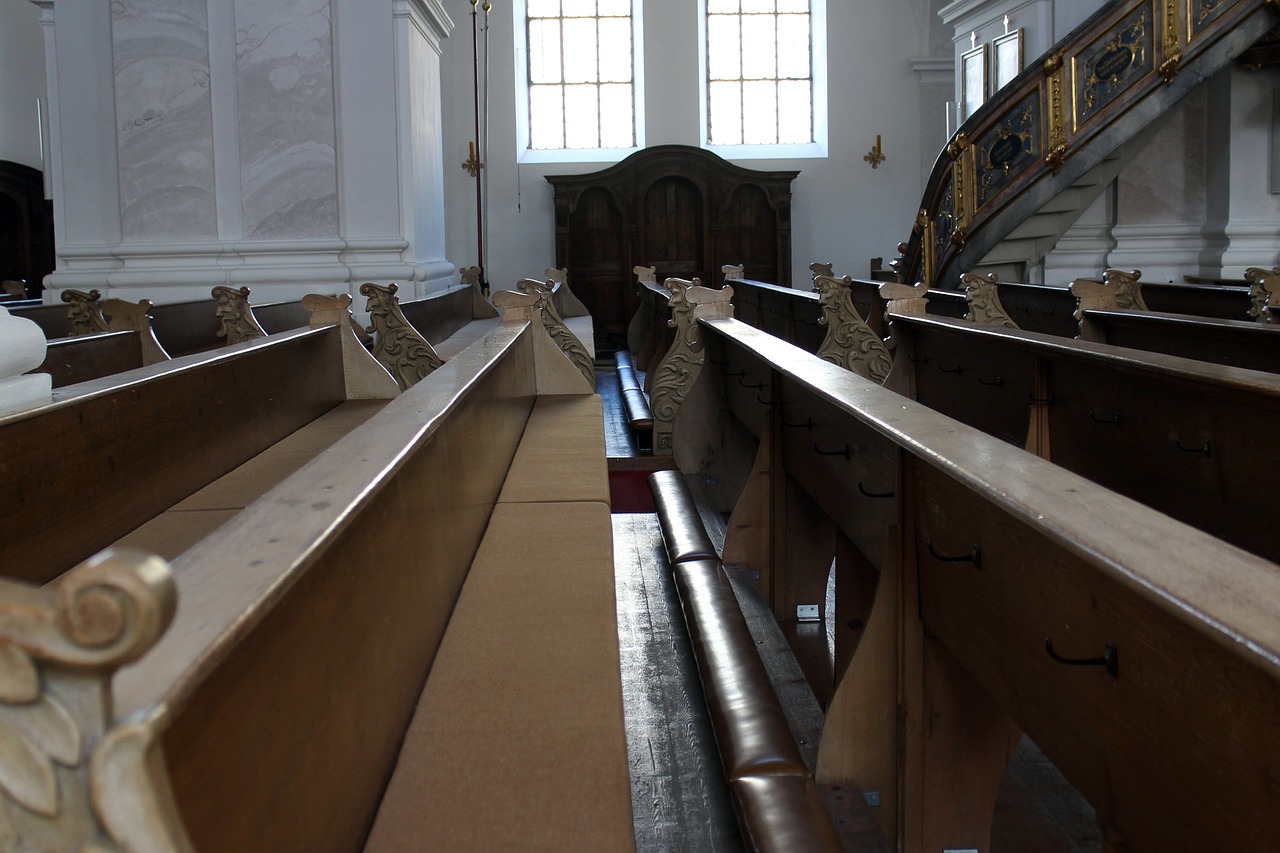
In Morris v Saint Francis Cabrini R.C. Church the Plaintiff sought to recover damages for injuries allegedly sustained at the Saint Francis Cabrini RC Church while attending a Saturday mass.  Plaintiff’s claim focused on the Church’s alleged negligence in maintaining a kneeler in one of the Church's pews.

The court granted the Church summary judgment dismissing the complaint and holding the Church had demonstrated sufficient proof that the kneeler in question was not defective, and that the Church neither created nor had actual or constructive notice of the allegedly defective kneeler.  The Church put forth a plethora of evidence regarding the inspection and repair of the kneelers inside the Church.  The court also specifically pointed to the deposition testimony of the Church’s priest who testified that the Church was cleaned every Friday, and that there were no reports of any defective kneelers the day before Plaintiff’s accident.  The Church also set forth evidence that the Church’s priest, maintenance man, and business manager all examined the allegedly defective kneeler two days after the accident and found no defect.  Moreover, the court pointed to Plaintiff’s own deposition testimony wherein she testified that she never complained to the Church about the kneeler being defective or dangerous, and that she continued to sit in the same pew where the accident took place without further incident during subsequent masses at that Church.    

In opposition, the Plaintiff put forth an affidavit from a party who did not witness the accident and an affirmation from Plaintiff’s attorney.  The court was not swayed by the Plaintiff’s submissions, finding the affidavit from the party who did not witness the accident “merely raise[d] feigned issues of fact unsupported by [the Plaintiff’s] own description of the [accident]” and that an affirmation from an attorney having no personal knowledge of the facts is insufficient to raise a triable issue of fact to defeat a motion for summary judgment. 

Despite the seriousness of Plaintiff’s injuries, there was a mountain of evidence in the Church's favor that Plaintiff could not be overcome. The court essentially concluded that sometimes an accident is just an accident, and it would be too speculative to blame the Church.  

The Wheels of Justice (Sometimes) Grind Exceedingly Slowly

W was still in the White House, LinkedIn let users add a profile picture for the first time, and the original iPhone had just been released.  In case those clues didn’t give it away, QBE Insurance Corporation had to wait almost 10 years for a favorable decision in a case with an uncomplicated fact pattern. 

915 2nd Pub, Inc. v QBE Insurance Corporation is a cautionary tale for insurance company defendants served with a suit they believe is worthy of immediate dismissal based upon straightforward policy provisions.  A review of the documents available online reveals that the parties, and the trial court, became mired in discovery-related issues that were of no consequence in the unanimous decision recently issued by the Appellate Division, First Department. 

In a concise decision, the court laid out the applicable facts: (1) excavation performed on the adjacent property caused structural damage to plaintiffs’ building; (2) plaintiffs submitted an insurance claim to QBE and also negotiated a sale of its property to the adjacent property owner (who allegedly caused the damage); (3) the purchaser paid what he called a “crazy price for the property” to plaintiffs, hoping to dispose of any liability from the excavation; and (4) plaintiffs filed this lawsuit to recover under the QBE insurance policy.

The QBE insurance policy, like almost every other insurance policy, required plaintiff to cooperate with QBE’s investigation of the claim. However, immediately after the sale of the property, and before plaintiff and QBE had reached an agreement on the amount to be paid under the policy, the purchaser demolished the building. As a result, there was nothing left for QBE to investigate.  The court found this to be a clear violation of the QBE insurance policy.

Moreover, the QBE insurance policy contained a fairly common provision that required plaintiff to do everything necessary to secure, and do nothing after the loss to impair, QBE’s subrogation rights. In selling the building to the entity that damaged it, plaintiffs clearly violated another straightforward policy provision. 

Kudos to the First Department for resolving a nearly decade-old case in a couple of months. 

Restaurant Demonstrates Entitlement to Summary Judgment

Slip and fall accidents during the winter plague business owners. No matter how many precautions a business may take to avoid such incidents, the occasional slip and fall is bound to happen inside or outside of commercial premises. In fact, slip and falls account for over one million emergency room visits each year.

Even the most seemingly benign incidents can turn into a lawsuit that heads to trial, with the verdict left in the hands of a jury. However, business owners in the Second Department can take some solace, as courts in that department have held commercial establishments are not required to provide a constant remedy to cover their floors with mats or continuously mop up moisture from rain or snow tracked into their premises. 

In Tappeto v. Bracco’s Clam & Oyster Bar, Inc., the defendant restaurant moved to dismiss the plaintiff’s complaint for personal injuries allegedly sustained at the restaurant after a slip and fall.

During her deposition, the plaintiff testified she slipped and fell after walking inside the restaurant about five minutes after it began to rain. The plaintiff claimed the floor of the restaurant became wet from patrons tracking water into the restaurant on their feet and the restaurant’s failure to have any mats on the floor. The restaurant’s owner testified at his deposition that his staff would mop rainwater spills when it rained.  Also, the restaurant’s manager testified that floor mats were placed in front of every door leading to the outside. The manager further testified that when it rained, there were always mats at every door. 

In his decision, Nassau County Supreme Court Justice Thomas Feinman found the restaurant demonstrated an entitlement to summary judgment. The court reasoned that, by showing it did not create the condition causing the plaintiff’s fall and it did not have actual or constructive notice of the condition, the restaurant could not be found liable for the plaintiff’s slip and fall. The court also found, among other things, that because the restaurant had no prior complaints from anyone slipping inside the bar, coupled with the plaintiff’s deposition testimony that she slipped and fell inside the restaurant about five minutes after it began to rain, the restaurant could not have sufficient notice of the condition. 


Snowy Sidewalk Slip and Fall on Long Island. Am I Liable?

The snow season is about to begin, and with it, so will the rise of slip and fall accidents.  Some winters can be relentless. For some reason, 20 inches of snow in March just does not drum up those same feelings as a “White Christmas.” Shoveling the sidewalk in front of your home can feel like a cruel joke after spending hours digging your car out of the driveway in order to get to work.  The nagging question that typically results in the homeowner shoveling the sidewalk is: “What happens if someone slips and falls on my sidewalk that has not been shoveled?” --and for good reason.  Slip and fall accidents involving snow and ice are very dangerous and often result in serious injuries. But are you legally obligated to shovel the sidewalk in front of your home? 

Most towns, villages, and cities have specific ordinances that require property owners to clear the sidewalk in front of their property. However, such ordinances do not necessarily create a legal duty owed to a pedestrian walking on the sidewalk in front of your home. 

Indeed, a homeowner’s failure to clear the sidewalk in front of his/her home in the Town of Hempstead does not automatically create liability for the homeowner for a slip and fall on snow or ice. The Town of Hempstead is actually responsible. However, the Town must have received prior written notice of the dangerous sidewalk conditions (which is often difficult in the case of weather-related conditions like snow and ice) in order to impose liability on the Town. The Village of Garden City has a comparable ordinance. Similarly, the Town of North Hempstead Code does not contain language imposing tort liability on abutting landowners for the breach of a duty to maintain sidewalks in a reasonably safe condition.  See Code of the Town of North Hempstead §§ 48-1 to 48-15.

However, many other municipalities on Long Island, including the Village of Mineola, Village of Hempstead, and the Town of Oyster Bay, have ordinances that specifically create a legal duty for abutting property owners for injuries caused by unsafe conditions (such as snow and ice) on sidewalks.  

The Code for the Village of Mineola reads as follows:

In the event that the owner and/or occupant of any premises abutting a sidewalk, path and/or public thoroughfare shall fail to [remove snow and ice], and personal injury . . . shall result from such failure, the owner and/or occupant of the premises shall be liable to all persons who are injured . . . as a result of such noncompliance.

The Code for the Village of Hempstead specifically requires that “[t]he owner [or] occupant of any real property shall, within 12 hours after the snow ceases to fall, remove the snow from the paved public walkway adjacent to such real property and keep the same free from snow and ice . . . In the event that personal injury or property damage shall result from the failure of any owner or occupant to comply with [the requirement to remove snow,] the owner and the occupant shall be liable to all persons injured or whose property is damaged directly or indirectly thereby and shall be liable to the Village of Hempstead . . .”

The Town of Oyster Bay's Code specifically provides that:

Each owner and occupant of any house or other building . . . in the Town shall keep the sidewalk in front of the lot or house or building free from obstruction by snow or ice and icy conditions . . . Snow and ice shall be removed within six hours after snow has ceased to fall . . . Such owner or occupant . . . shall be liable for any injury or damage by reason of omission, failure or negligence to make, maintain or repair such sidewalk or for a violation or nonobservance of the ordinances relating to making, maintaining and repairing sidewalks . . .

Accordingly, if you live in a town or village with ordinances that specifically impose liability, you have a duty to keep the sidewalk abutting your property in reasonably safe condition. This means not only clearing the sidewalk of snow and ice, but also applying salt or sand.

If you do not live in a town or village with such ordinances, you might not be found liable for a slip and fall, but it does not mean a plaintiff’s attorney will not try to blame you for the incident.  In any event, you will likely still shovel your sidewalk in an effort to be a good neighbor. Who likes that one neighbor on the block who doesn’t shovel anyway?

You should thoroughly read your local village or town code (most are available online) for more answers.    

For Those Who Face Foreclosure: Fear Not. Here are Five Fast Alternatives.

Nationally, foreclosures have dropped significantly over the last few years. However, the lingering effects of the housing-market collapse, which started almost a decade ago, will continue in 2017 and beyond. In fact, approximately one third of all civil cases in New York State courts are foreclosure actions. In 2015, more than 40,000 new foreclosure actions were filed throughout the state (which is only a few thousand fewer cases than were filed at the height of the housing collapse in 2009). Notably, 60 percent of New York State’s foreclosure actions were commenced in four counties in the metropolitan area, including Brooklyn and Queens. 

The thought of losing a home can be daunting. However, foreclosure actions have wide-ranging resolutions that do not always result in the loss of the home. Here is a list of potentially viable alternatives to succumbing to foreclosure: 

1.      LOAN MODIFICATION

You may be able to conduct negotiations with your lender to complete a loan modification to modify the terms of your agreement with your lender—such as the payment amount, interest rate, length of the loan, etc.

2.      FORECLOSURE DEFENSE LITIGATION STRATEGY

You can take an aggressive foreclosure defense approach against the allegations of the lender – challenging the validity of the foreclosure proceedings and the lender’s compliance with regulations in initiating the foreclosure proceeding. This includes, among other things, questioning whether the lender violated any of your rights (predatory lending practices) or whether there are procedural violations with the foreclosure.    

3.      CHAPTER 13 BANKRUPTCY

Filing for Chapter 13 bankruptcy will place an automatic stay on foreclosure proceedings. This option can provide you with time to figure out a resolution and may allow you to keep your home. If you stay current on your loan payments and make up the arrears through your Chapter 13 bankruptcy plan, the lender cannot foreclose.  

4.      SHORT SALE

A short sale may enable you to sell your home for less than the balance of your loan. However, the short sale must be negotiated and approved with your lender in advance to ensure you are not held accountable for the difference between the sale and your loan balance.

5.      DEED IN LIEU OF FORECLOSURE/CASH FOR KEYS

Deed in Lieu of Foreclosure and Cash for Keys are options wherein a homeowner agrees to give back the property. With a Deed in Lieu of Foreclosure, the homeowner agrees to give back the home without requiring the bank to complete a formal foreclosure proceeding. Cash for Keys is a similar option, except, in this case, the lender offers a cash incentive for the homeowner to give back the home and leave it in good condition without waiting for the entire foreclosure process to conclude. These options can be advantageous to a defaulting homeowner, as they allow for forgiveness of the remaining debt, avoid the publicity of a foreclosure, and have less of an impact on his or her credit. Lenders typically prefer these options, as they reduce the time and expense of litigating a foreclosure proceeding to conclusion in New York.

Out-of-Possession Landlord Prevails in Personal Injury Lawsuit

Little League Image.png

In Burgess v City of Glen Falls, a child injured himself after falling from the upper tier of a set of bleachers as a result of a missing foot plank at the East Field Little League Complex in the City of Glen Falls. The City of Glen Falls (hereinafter the “City”) owns the property where the baseball field and bleachers are located leases it Glens Falls Little League, Inc. (hereinafter “GFLL”) under the terms of a 30-year lease, running from January 1, 1992 to December 31, 2021. 

Under the terms of the lease between GFLL and the City, GFLL had “exclusive use of the Property” to conduct its baseball program. GFLL also agreed that it would construct baseball fields on the site at its expense. The lease further provided that “GFLL shall be responsible for all maintenance and repairs to the Property.” 

The City moved for summary judgment to dismiss the action upon the ground that the City was an out-of-possession landlord who had relinquished control of the premises to GFLL.

In opposition, the Plaintiff argued that the City is not an out-of-possession landlord, as the lease allowed for the City to conduct certain scheduled events on the Property when not in use by GFLL. Pursuant to the lease provision, the City is responsible for any maintenance or repairs required as a result of the events it conducts. The Plaintiff further noted that the City had exercised this right ten months prior to the incident, when the City held an “Annual Summer Jam” at the Property.

The Supreme Court disagreed with Plaintiff’s argument and dismissed the Complaint against the City. The Supreme Court found the provision in the lease, allowing the City to use the Property from time to time, to be analogous to a right to re-enter that does not impair the City’s status as an “out of possession” owner.